【開運・虹龍】巨大曼荼羅アート 龍体文字&篆書体✴︎108体✴︎34×34cm
(税込) 送料込み
商品の説明
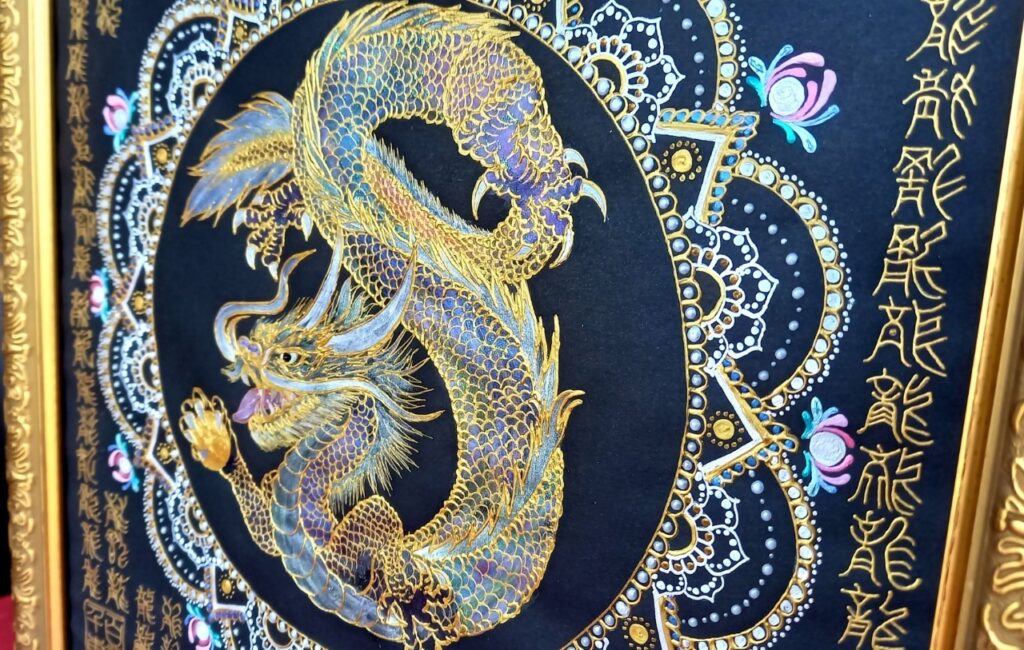
中央には迫力のあるカラフルで大きな
「虹龍」を描いています。
古来から伝わる篆書体で曼荼羅アートの周りに
異なる形の「龍」を100体描いています。
龍体文字8体と合わせ全部で108体描き
開運パワーが宿る数字にしています。
中央の虹龍には、以下の意味があります。
・自分らしく生きる
・大きな変化を生み出す、促すエネルギーを与える
・自分の使命や役割を生きるサポートをする
*☼*―――――*☼*―――――*☼*―――――
一文字ごとに意味のある「龍体文字」は
《願いを叶える龍のパワーを持った文字》
として知られており、手をかざすとエネルギーや
かすかな風を感じる方もいらっしゃいます。
アルファベットや数字のような形、
魚の骨のような図形や曲がりくねった線
などが多いのですが、曲線的で美しく
神秘的なのが龍体文字の魅力です。
*☼*―――――*☼*―――――*☼*―――――
※額サイズ34×34cmの本格的な
額付きでの販売となります。
※絞り袋に入れた絵の具を使用して
一つ一つ手作業で描いており、
立体的に描いた3Dの開運アートです。
世界でひとつの1点モノとなります。
実際はアクリル板が付いていますが
反射するためアクリル板なしで撮影しています。
実際に飾って頂く際にはよりクリアで
鮮明な状態の見映えで見ることができます。
その他の作品を検索→#CHIMアート
是非、さまざまなの商品をご覧くださいませ☆
#開運
#開運アート
#開運グッズ
#エネルギーアート
#龍
#虹龍
#龍体文字
#篆書体
#曼荼羅
#曼荼羅アート
#運気上昇
#CHIMアート商品の情報
| カテゴリー | ハンドメイド > 日用品/インテリア > アート/写真 |
|---|---|
| 商品の状態 | 新品、未使用 |

開運・虹龍/天女】巨大曼荼羅アート 龍体文字&篆書体✴︎108体✴︎34

開運・虹龍】巨大曼荼羅アート 龍体文字\u0026篆書体✴︎108体✴︎34

開運・喜】龍体文字&篆書体✴︎108体✴︎巨大曼荼羅アート(34×34cm)-

開運・緑龍】巨大曼荼羅アート 龍体文字&篆書体✴︎108体✴︎34×34cm-

開運・金鳳凰】巨大曼荼羅アート龍体文字\u0026篆書体✴︎108体✴︎34

開運・金龍】巨大曼荼羅アート 龍体文字&篆書体✴︎108体✴︎34×34cm-

開運・寿】龍体文字&篆書体✴︎108体✴︎巨大曼荼羅アート(34×34cm

開運・虹龍】巨大曼荼羅アート 龍体文字&篆書体✴︎108体✴︎34×34cm

開運・金龍】巨大曼荼羅アート 龍体文字&篆書体✴︎108体✴︎34×34cm-

開運・紫龍】巨大曼荼羅アート 龍体文字\u0026篆書体✴︎108体✴︎34

開運・虹龍】巨大曼荼羅アート 龍体文字&篆書体✴︎108体✴︎34×34cm

開運・虹龍】巨大曼荼羅アート 龍体文字&篆書体✴︎108体✴︎34×34cm

開運・鳳凰/弁財天】巨大曼荼羅アート龍体文字&篆書体✴︎108体✴︎34

開運・紫龍】巨大曼荼羅アート 龍体文字&篆書体✴︎108体✴︎34×34cm

開運・虹龍】巨大曼荼羅アート 龍体文字\u0026篆書体✴︎108体✴︎34

開運・緑龍】巨大曼荼羅アート 龍体文字&篆書体✴︎108体✴︎34×34cm-

開運・金鳳凰】巨大曼荼羅アート龍体文字\u0026篆書体✴︎108体✴︎34

開運・紫龍】巨大曼荼羅アート 龍体文字&篆書体✴︎108体✴︎34×34cm-

開運・虹龍】巨大曼荼羅アート 龍体文字&篆書体✴︎108体✴︎34×34cm

開運・虹龍/天女】巨大曼荼羅アート 龍体文字&篆書体✴︎108体✴︎34

開運・金龍/弁財天】巨大曼荼羅アート龍体文字&篆書体✴︎108体✴︎34

即納高品質 巨大曼荼羅アート 龍体文字&篆書体✴︎108体✴︎34×34cm

butszo.jp - 巨大曼荼羅アート龍体文字篆書体✴︎108体✴︎34×34cm

開運・銀龍】巨大曼荼羅アート 龍体文字&篆書体✴︎108体✴︎34×34cm

開運・虹龍/天女】巨大曼荼羅アート 龍体文字&篆書体✴︎108体✴︎34

即納高品質 巨大曼荼羅アート 龍体文字&篆書体✴︎108体✴︎34×34cm

在庫好評 巨大曼荼羅アート 龍体文字&篆書体✴︎108体✴︎34×34cm

開運・虹龍/天女】巨大曼荼羅アート 龍体文字&篆書体✴︎108体✴︎34

開運・虹龍/天女】巨大曼荼羅アート 龍体文字&篆書体✴︎108体✴︎34
開運・観音菩薩】巨大曼荼羅アート 龍体文字&篆書体✴︎108体✴︎34

開運・紫龍】巨大曼荼羅アート 龍体文字&篆書体✴︎108体✴︎34×34cm-

開運・寿】龍体文字\u0026篆書体✴︎108体✴︎巨大曼荼羅アート(34

開運・虹龍/天女】巨大曼荼羅アート 龍体文字&篆書体✴︎108体✴︎34

開運・銀龍】巨大曼荼羅アート 龍体文字&篆書体✴︎108体✴︎34×34cm

開運・銀龍】巨大曼荼羅アート 龍体文字&篆書体✴︎108体✴︎34×34cm

開運・紫龍】巨大曼荼羅アート 龍体文字✴︎108体✴︎34×34cm 値引き
開運・金龍/七福神】巨大曼荼羅アート 龍体文字&篆書体✴︎108体
開運・観音菩薩】巨大曼荼羅アート 龍体文字&篆書体✴︎108体✴︎34
緑龍/不動明王】巨大曼荼羅アート 龍体文字&篆書体✴︎108体✴︎34×34cm-
開運・金龍/弁財天】巨大曼荼羅アート龍体文字&篆書体✴︎108体✴︎34


商品の情報
メルカリ安心への取り組み
お金は事務局に支払われ、評価後に振り込まれます
出品者
スピード発送
この出品者は平均24時間以内に発送しています


